
~ and you unlock a version of Europe that most travelers never see, simply by shifting your dates a few weeks in either direction.
Everyone wants to travel in July. School is out, the weather feels safe, and summer has always been the obvious choice.
It is also, quietly, the worst time to visit most of Europe’s best-known destinations.
Shoulder season sits in the gap between peak summer and the off season, roughly April through early June and September through October. It is the window my most seasoned travelers request again and again, and once you understand why, you will probably ask for it too.
Fewer People, Better Everything
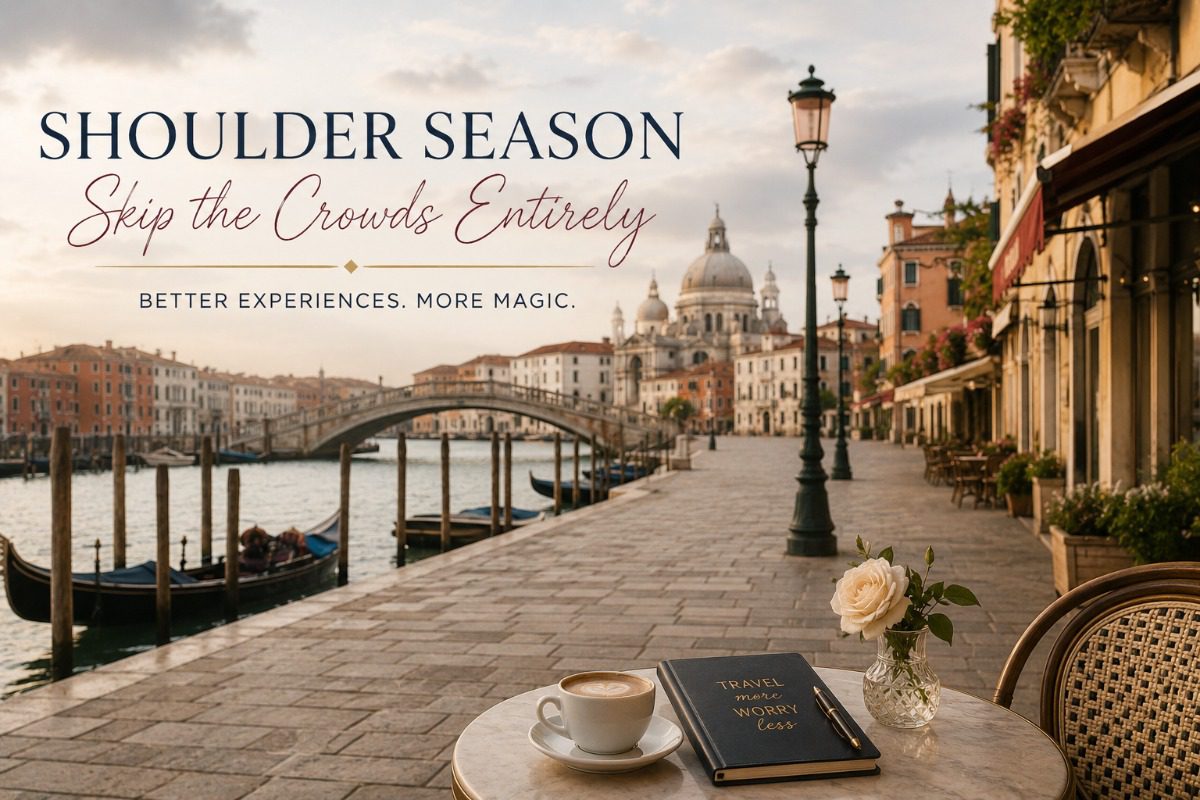
Piazza San Marco in August is a wall of tour groups, elbow to elbow from morning until dusk. That same square in late September becomes a place you can actually stand in and hear yourself think. Museums move faster once the crowds thin out. Restaurants have tables without a three-week wait, and the best viewpoints in every city stay open long enough to actually enjoy, instead of becoming a five-minute photo scramble before the next group pushes through.
Better Weather, Better Rates
Rome in August regularly climbs past 95 degrees, with humidity that turns a simple walking tour into an endurance test. May and late September sit comfortably in the mid-70s, and that temperature swing changes the entire experience of a city built for wandering. Hotels notice the shift too. Rates that spike during peak summer often drop meaningfully once the calendar turns toward fall, and flights follow the same pattern, since airlines price against demand and demand falls the moment school starts back up. Shoulder season rarely costs more than peak summer, and it frequently costs less.
The City Gets Its Life Back
Peak summer destinations often feel staged for tourists, because in many ways they are. Locals return from their own summer holidays once September arrives, and markets start feeling like markets again instead of souvenir corridors built for a quick photo. Restaurants fill with regulars rather than exclusively with visitors working from a guidebook, and the entire destination simply feels more like itself, less like a performance built around a season.
Where the Difference Shows Up Most
Italy rewards shoulder season more than almost anywhere else I send clients. Tuscany in October, with the harvest underway and the light turning gold across the hills, might be the single best version of the region all year. Greece stretches beautifully into October, holding onto warm water while shedding the crowds that pack its islands in August. Scandinavia opens up its own version of this window in late spring and early fall, when long daylight or the first hints of aurora activity offer something summer simply cannot.
What You Give Up, and Why It Is Worth It
Shoulder season is not without a few trade-offs. Smaller regional restaurants sometimes reduce their hours outside peak months, and swimming season ends earlier in the northern destinations. None of that outweighs what you gain in return. A well-planned shoulder season trip almost always delivers a richer version of the same destination, and I build every itinerary I create with exactly that trade-off in mind.
Thinking about shifting your dates?
Visit amoretraveldesigns.com/contact-me or reach me at cathy@amoretraveldesigns.com.
Check out my other blog posts:
WORLD FROM FORT COLLINS