
— about all of it. The villa, the light, the way a Tuscan hill town can rearrange something inside you that you did not know needed rearranging.
Under the Tuscan Sun came out in 2003. It has never stopped sending people to Italy. I had to visit Cortona as well as it was one of my favorite movies!
That is the thing about a film that gets a place right. It does not just entertain — it plants something. A longing. A specific address for a feeling you did not know you had. Frances — recently divorced, impulsively brave, buying a crumbling villa in a Tuscan hill town she had seen from a bus window — gave a generation of women (and plenty of men) permission to want something different. Something slower. Something drenched in olive oil and afternoon light.
The town she chose was Cortona. And Cortona, it turns out, is everything Diane Lane promised and then some.
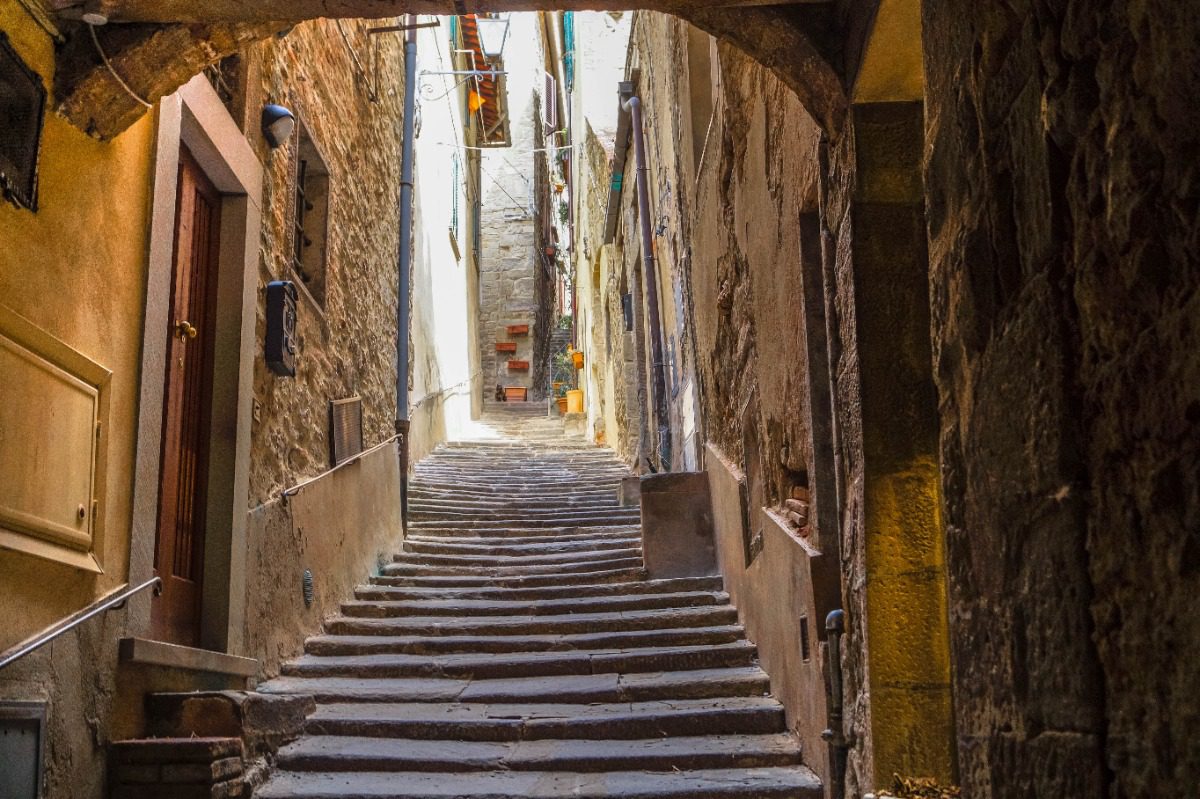
What You See in the Film
The filmmakers chose Cortona because it looks exactly like the Italy people dream about without needing to rearrange anything. It is a hilltop town in southeastern Tuscany, about 50 miles south of Florence, perched above a valley of olive groves and vineyards with views that stretch all the way to Lake Trasimeno.
The Piazza della Repubblica — Cortona’s main square — is where Frances first steps off the tour bus and falls under the town’s spell. Market days still happen there, the piazza still buzzes with local life, and the surrounding stone buildings look exactly as they do on screen. Standing there feels less like visiting a filming location and more like walking into a memory that was never yours but feels like it should be.
Villa Bramasole, Frances’s impulsive purchase, was filmed at Villa Laura on the outskirts of Cortona. The crumbling walls, the overgrown gardens, the slow transformation into something beautiful — it is all still there. And yes, people make special trips just to stand in front of it.
Positano on the Amalfi Coast also appears in the film, in those sun-drenched scenes where Frances drives south with a handsome stranger. The pastel houses climbing the hillside, the glittering water below — Positano is exactly that gorgeous in person. Possibly more.
What the Film Does Not Show You
Cortona is rich in Etruscan history that predates the film by about 2,500 years. Two kilometers of ancient Etruscan walls still wrap around the town, dating back to the 5th century BCE. The Museo dell’Accademia Etrusca houses one of the most significant Etruscan collections in Italy. The Girifalco Castle at the top of the hill offers views that will genuinely stop you mid-sentence.
The town has a rhythm to it that the film captures but cannot fully convey. The way mornings smell like espresso and fresh bread. The way afternoons slow to almost nothing. The way evenings gather in the piazza and stretch longer than they have any right to.
Cortona is walkable, intimate, and worth two or three deeply unhurried days. From there, Florence, Siena, Montepulciano, and the Amalfi Coast are all within reach — which makes a Tuscan itinerary built around Cortona one of the most satisfying trips I know how to plan.
Why People Are Still Going
Diane Lane has probably sent more people to Italy than any tourism campaign ever could. The film’s impact on Cortona was immediate and permanent — the town embraced it, and the pull has never really stopped.
But here is what I find most interesting: the people who come because of the film almost always stay because of the place. Cortona does not need the movie to justify itself. It was extraordinary before the cameras arrived. The film just gave people a reason to show up — and then the town did the rest.
If you watched Under the Tuscan Sun and felt that particular ache for a life that moves differently — I would love to help you find it in person. It is very much still there. And yes, Diane Lane was right.
Ready to find your Cortona?
Visit www.amoretraveldesigns.com/contact-me or reach me at cathy@amoretraveldesigns.com. Let’s build your Tuscany.
Check out my other blog posts:
MOMENTS IN TUSCANY